Metadata Compliance: Cybersecurity Risks Beyond GDPR
Introduction: The Unseen Threat to Your Business: Metadata & Compliance
In today's digital world, your business shares countless images and documents every day. Marketing teams post on social media, sales teams send proposals, and HR uploads employee photos to the company portal. But what if every file shared contained hidden data? This layer of information could expose office locations, software versions, or even breach industry regulations.
This hidden data is called metadata, and it presents a significant and often overlooked threat to your organization's security and compliance posture. While many businesses are focused on GDPR, the regulatory landscape is far broader and more complex. Are you certain your company’s digital assets aren’t creating unseen vulnerabilities?
This article explores the critical cybersecurity risks associated with metadata, extending beyond GDPR to cover industry-specific standards like HIPAA, PCI DSS, and ISO. We will show you how to build a robust defense strategy and how a simple, secure tool can become a vital part of your compliance toolkit. Protecting your business can start with one easy step, and you can try our free tool to see how simple it is.
The Hidden Threat: How Metadata Impacts Cybersecurity & Compliance
Before you can manage the risk, you need to understand it. Metadata, or "data about data," is automatically embedded in nearly every file you create. For businesses, this seemingly harmless information can quickly become a liability, impacting both your cybersecurity defenses and your ability to meet compliance standards.
Unmasking Sensitive Data: What Metadata Reveals in Business Assets
Think of metadata as a digital footprint. An image taken for a press release or a PDF report sent to a client can carry sensitive details that you never intended to share. This information can be easily accessed by anyone, including competitors, journalists, or malicious actors.
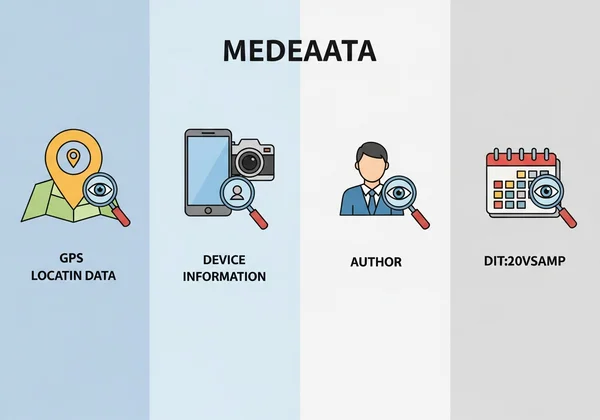
Here are just a few examples of what metadata can reveal in your business assets:
- GPS Coordinates: The precise location where a photo was taken, potentially exposing a confidential new office, an executive’s home, or the site of a private corporate event.
- Device and Software Information: The exact camera model, phone type, and even the version of software (like Adobe Photoshop) used to edit an image. This can give hackers clues about potential vulnerabilities in your systems.
- Author and Company Names: The names of employees who created or modified a document, exposing your internal team structure.
- Creation and Modification Dates: Timestamps that can reveal internal project timelines, work schedules, or when a particular strategy was developed.
Leaving this data exposed is like leaving a sensitive company document on a public bench. It’s an unnecessary risk that can have serious consequences.
The Expanding Regulatory Landscape: Beyond GDPR for Global Operations
The General Data Protection Regulation (GDPR) made data privacy a global conversation, but it's only one piece of the puzzle. Global companies face a tangled web of regulations. Sector-specific rules add even more complexity.
Failing to manage this data can lead to non-compliance with a host of other standards, each with its own set of steep penalties. As we’ll see, industries like healthcare, finance, and enterprise technology have their own strict rules that make metadata management a business necessity.
Industry-Specific Metadata Risks: HIPAA, PCI DSS, & ISO Standards
Different industries face unique data security challenges. Understanding how metadata affects your specific sector is the first step toward building an effective compliance strategy. For many, a simple oversight can lead to a major breach.
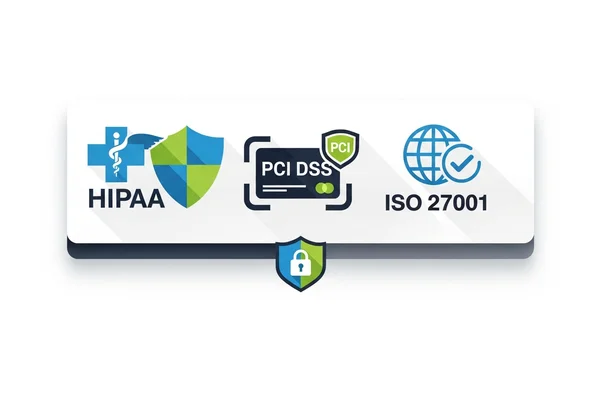
Healthcare Data Breaches: Safeguarding Patient Privacy (HIPAA Compliance)
In healthcare, protecting patient information is paramount. The Health Insurance Portability and Accountability Act (HIPAA) sets strict rules for safeguarding Protected Health Information (PHI). A significant area of risk involves HIPAA photo privacy. For instance, a 2023 healthcare breach traced to photo metadata cost $1.2M in HIPAA fines.
Imagine a hospital posts a "patient success story" photo on its website. If that photo's metadata contains GPS data pinpointing the specific treatment facility, along with a timestamp, it could inadvertently link a patient to a location and time of care. This constitutes a data breach under HIPAA, potentially leading to severe fines and reputational damage. Removing metadata from all patient-related imagery is a non-negotiable step for any healthcare organization.
Financial Security & Transactional Data: Adhering to PCI DSS Standards
The Payment Card Industry Data Security Standard (PCI DSS) is designed to protect cardholder data and prevent fraud. While metadata may not directly contain credit card numbers, it can create vulnerabilities that attackers exploit.
For example, a screenshot of a system configuration shared in an internal technical document could have metadata revealing the operating system and software versions. If this document is ever accidentally leaked, attackers could use that information to target known exploits. Adhering to PCI DSS requires a holistic approach to security, and that includes sanitizing all digital assets to minimize your attack surface.
Enterprise Information Security: Aligning with ISO 27001 & NIST Frameworks
For many large enterprises, achieving certifications like ISO 27001 is a mark of a mature information security management system (ISMS). These ISO metadata standards and frameworks like those from NIST (National Institute of Standards and Technology) require organizations to identify and manage risks related to all information assets.
Metadata leakage is a clear information security risk. A robust ISMS must include policies and procedures for stripping sensitive information from files before they are shared externally. Using a reliable metadata removal tool is a practical control measure that directly supports the objectives of ISO 27001 and demonstrates a commitment to comprehensive data protection.
Developing Robust Metadata Removal Protocols for Businesses
Recognizing the threat is the first step. The next is implementing clear, consistent, and effective protocols to manage it. A proactive approach to metadata removal protects your business from compliance penalties, data breaches, and reputational harm.
Integrating Metadata Stripping into Your Data Governance Strategy
Metadata management should not be an afterthought. It must be a formal part of your company's data governance strategy. This means creating a clear policy that outlines when and how metadata should be removed from files.
Your policy should specify:
- Which types of files require metadata stripping (e.g., all images for public release, client-facing documents).
- Which departments are responsible (e.g., Marketing, PR, Legal).
- The approved tools and procedures for metadata removal.
Making this a standard operating procedure (SOP) ensures that every employee understands their role in protecting the company’s sensitive information.
Metadata Removal Tools: Automation vs. Manual Processes
When it comes to removing metadata, you have two primary options: manual methods or automated tools. Manual removal, using built-in OS features or desktop software, can be time-consuming, inconsistent, and prone to human error. It’s simply not scalable for a modern business.
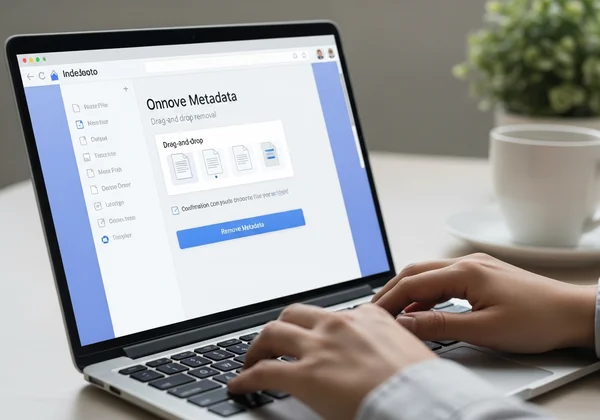
Automated tools offer a far more efficient and reliable solution. An online tool, for instance, allows any employee to quickly clean a file before sharing it. When choosing a tool, prioritize security and simplicity. A solution like our secure online metadata removal tool is ideal for business use because it is designed for maximum privacy—it processes files instantly and never stores your images, ensuring your sensitive data remains secure.
Training & Awareness: Educating Employees on Metadata Risks
A policy is only effective if your employees follow it. The final, crucial piece of your strategy is training. Conduct regular awareness sessions to educate your staff, especially those in high-risk roles like marketing, communications, and sales, about the dangers of metadata.
Show them real-world examples of metadata leaks and provide clear, simple instructions on how to use the approved removal tools. When your team understands the "why" behind the policy, they become your first and best line of defense against a potential data breach.
Strengthen Your Enterprise Privacy Posture Today
With ransomware and data breaches surging, metadata leaks are emerging as a silent threat to enterprises. From violating HIPAA with a single photo to exposing system vulnerabilities that compromise PCI DSS compliance, the hidden data in your files represents a clear and present danger.
However, protecting your organization doesn't require a complex or expensive overhaul. The solution starts with three simple steps:
- Acknowledge that metadata is a security and compliance risk.
- Implement a clear policy for removing it from all public-facing assets.
- Equip your team with a simple, secure, and efficient tool to get the job done.
Strengthen your enterprise privacy posture and build a more resilient security framework. Take the first step now by making metadata removal a standard practice. You can ensure your images are safe and compliant by using our secure online tool.

Common Questions About Business Metadata Compliance
What specific regulations beyond GDPR address image metadata in business contexts?
Besides GDPR, several other key regulations are relevant. HIPAA in the U.S. healthcare sector has strict rules on protecting patient information, which includes data in photos. The California Consumer Privacy Act (CCPA/CPRA) also has a broad definition of personal information that can include metadata like geolocation. Industry standards like PCI DSS for finance indirectly address metadata as a potential security vulnerability.
How can metadata removal tools aid in achieving ISO 27001 certification?
ISO 27001 is a framework for managing information security risks. A core part of it is asset management and implementing appropriate controls. Using a metadata removal tool is a tangible control measure that helps an organization protect its information assets (like images and documents) from unauthorized disclosure. It demonstrates a proactive approach to risk management, which is a key requirement for certification.
Is it safe to remove metadata from sensitive company documents using online tools?
Security hinges on the tool’s design—prioritize services that delete files instantly and never store data, like our privacy-first tool. The safest online tools are those designed with a "zero-knowledge" or "zero-storage" architecture. This means they process your file in your browser or on a server and then immediately delete it without ever storing it.
What information can be revealed from metadata in a corporate image or document?
Metadata can reveal a surprising amount of sensitive corporate data, including the precise GPS location of offices or event venues, the names of employees, specific dates and times of internal activities, and technical details about your company's software and hardware. This information could be used for corporate espionage, social engineering attacks, or to identify security vulnerabilities.
What are the legal implications for businesses of a metadata leak?
The legal implications can be severe. Depending on the data leaked and the relevant jurisdiction, consequences can include massive fines (e.g., up to 4% of global annual turnover under GDPR), regulatory investigations, mandatory breach notifications to customers, and civil lawsuits from affected individuals. Beyond the legal penalties, the damage to a company's reputation and customer trust can be equally devastating.